
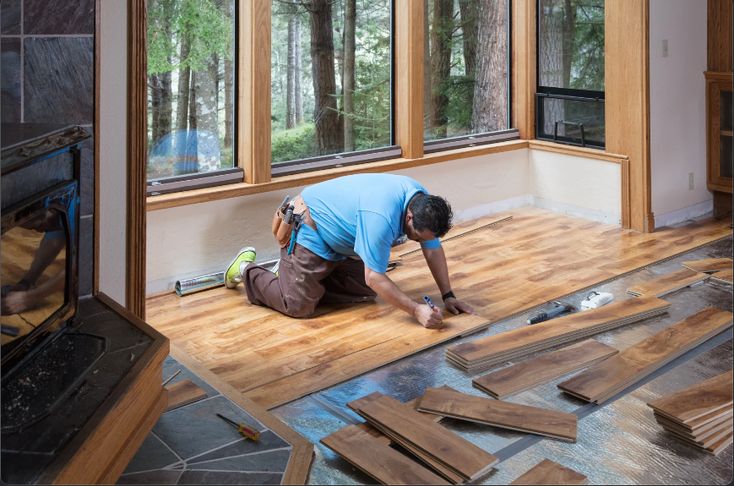
Floors take on more daily wear than almost any other surface in a home, and it eventually shows — a scratch that won’t buff out, a board that creaks every time someone walks past, a stain left behind by a plant pot that sat in the wrong spot a little too long. The good news is that most of these problems are fixable without replacing the whole floor. Elwood’s Flooring provides floor repair services for homeowners throughout Concord and the greater Charlotte area, and this guide covers the most common floor problems, what typically causes them, and how each one gets fixed.
Scratches and Surface Wear
Scratches are the most common complaint we hear, usually from pet claws, dragged furniture, or everyday foot traffic carrying in small grit that acts like sandpaper over time. Surface-level scratches affect only the finish layer, while deeper gouges can cut into the wood itself.
How it’s typically fixed: Light surface scratches can often be addressed with a touch-up or light screening that blends the damaged area into the surrounding finish without a full refinish. More extensive scratching spread across a room usually points toward a full sand and refinish being the more practical long-term fix, since spot-treating dozens of individual scratches rarely looks as clean as a complete resurface.
Squeaky and Creaky Floorboards
That familiar creak underfoot almost always comes down to movement — a board rubbing against a nail, a subfloor that’s slightly separated from the joists below, or wood that has shrunk slightly over time, leaving small gaps where boards shift against each other when weight is applied.
How it’s typically fixed: In many cases, squeaks can be resolved by securing the floorboard more firmly to the subfloor, either from above with specialized fasteners or, when accessible, from below. The right fix depends on whether the squeak is isolated to one or two boards or spread across a larger section of the room, which usually points to a broader subfloor issue.
Water Damage and Staining
Water damage shows up in a few different ways depending on how much moisture got into the wood and how long it sat there. A light stain might just be surface discoloration, while more significant exposure can cause cupping — where the edges of a board rise higher than the center — or even buckling in severe cases.
How it’s typically fixed: Light to moderate staining can often be sanded out during a refinishing project, since the discoloration typically doesn’t penetrate deeper than what sanding removes. Cupped boards often return to a flatter profile once the underlying moisture issue is resolved and the wood has time to acclimate, after which refinishing restores a smooth, even surface. Severely buckled or structurally compromised boards may need to be replaced outright rather than repaired.
Gaps Between Boards
Some seasonal gapping is completely normal — wood naturally contracts in drier winter months and expands again as humidity returns in warmer seasons. Persistent or unusually wide gaps, though, can point to a subfloor that wasn’t properly prepared during the original installation, or to significant, repeated humidity swings in the home.
How it’s typically fixed: Normal seasonal gaps typically close back up on their own. Gaps that don’t close, or that were there to begin with due to installation issues, can often be filled with a color-matched wood filler, while more significant or widespread gapping may call for board replacement in the affected area.
Loose or Lifting Boards
Boards that have come loose from the subfloor, or laminate and vinyl planks that have lifted at the seams, usually point to either a failed adhesive bond, moisture intrusion, or boards that were never properly secured during the original installation.
How it’s typically fixed: Loose hardwood boards can often be re-secured directly to the subfloor. Lifting laminate or vinyl plank seams sometimes require re-adhering the affected planks, though in cases where moisture has caused the material to warp, replacement of the affected planks is usually the more reliable fix.
Pet Damage
Beyond general scratching, pets can cause more concentrated damage — claw gouges near doorways, stains and odor from accidents that soaked into the wood, or chew marks on exposed edges and transitions.
How it’s typically fixed: Isolated gouges and chew damage are often addressed through spot repair or board replacement, depending on severity. Stains and odor that have penetrated the wood sometimes require the affected boards to be replaced, since sanding alone doesn’t always fully remove deeply absorbed moisture and odor.
How to Tell If Repair Is Enough, or If You Need Something More
This is one of the most common questions homeowners have, and the honest answer depends on the extent of the damage:
- Spot repair is usually sufficient for isolated scratches, minor gaps, a single squeaky board, or small, contained water stains.
- A full sand and refinish makes more sense when wear, scratching, or staining is spread across a large portion of the floor rather than isolated to one or two spots.
- Board replacement becomes necessary when specific boards are structurally compromised — buckled, deeply stained, or damaged beyond what sanding and refinishing can correct.
- Full floor replacement is rarely needed for hardwood specifically, since the vast majority of damage can be addressed through repair, board replacement, or refinishing, which is part of why hardwood remains such a durable long-term flooring investment.
What to Do If You Notice Water Damage
- Address the water source and stop any ongoing leak or moisture intrusion as soon as possible.
- Dry the area thoroughly using fans or a dehumidifier rather than letting it air dry slowly on its own.
- Avoid sanding too soon — sanding wood while it’s still swollen from moisture can leave a permanently uneven surface once it fully dries.
- Get a professional assessment to determine whether the affected boards can be saved through drying and refinishing or need to be replaced.
Preventing Future Floor Damage
- Use furniture pads under table and chair legs to reduce scratching from everyday movement.
- Keep pet nails trimmed to minimize surface scratching over time.
- Wipe up spills quickly, particularly in kitchens and entryways where moisture exposure happens most often.
- Maintain consistent indoor humidity to reduce the expansion and contraction that leads to gapping and cupping.
- Use doormats at entrances to reduce the grit and debris tracked in that causes much of the fine surface scratching over time.
Why Choose Elwood’s Flooring for Floor Repair
Every project at Elwood’s Flooring is personally overseen by Dwayne, which means your floor repair gets the same attention to detail whether it’s a single squeaky board or a room full of scratches that need addressing. We take the time to properly diagnose the cause before recommending a fix, so the repair actually holds up rather than needing to be redone.
Frequently Asked Questions
Can scratched hardwood floors be fixed without a full refinish? Yes, isolated or minor scratches can often be addressed with spot treatment or light screening. Extensive scratching across a room usually benefits from a full sand and refinish for the most even result.
Why does my floor squeak in only one spot? This usually points to a single loose board or a localized gap between the board and subfloor, which can typically be resolved with a targeted repair rather than addressing the whole floor.
Is it normal for hardwood floors to have small gaps in winter? Yes, slight seasonal gapping is normal as wood contracts in drier conditions and is generally not a cause for concern if the gaps close back up as humidity returns.
Can water-damaged hardwood always be saved? Often, yes, especially if the damage is caught early and dried properly. Severely buckled or long-saturated boards may need replacement rather than repair.
How do I know if I need a repair or a full refinish? Isolated issues like a single scratch, squeak, or stain usually call for a targeted repair. Damage spread across a large portion of the floor typically makes a full refinish the more practical and cost-effective option.
Get a Free Floor Repair Assessment
Whether it’s a squeaky board, a stubborn scratch, or water damage you’re not sure how to handle, Elwood’s Flooring can assess the issue and recommend the right fix. Serving Concord, Charlotte, Huntersville, Cornelius, and the surrounding area. Call (704) 433-1013 or request a free quote online.