
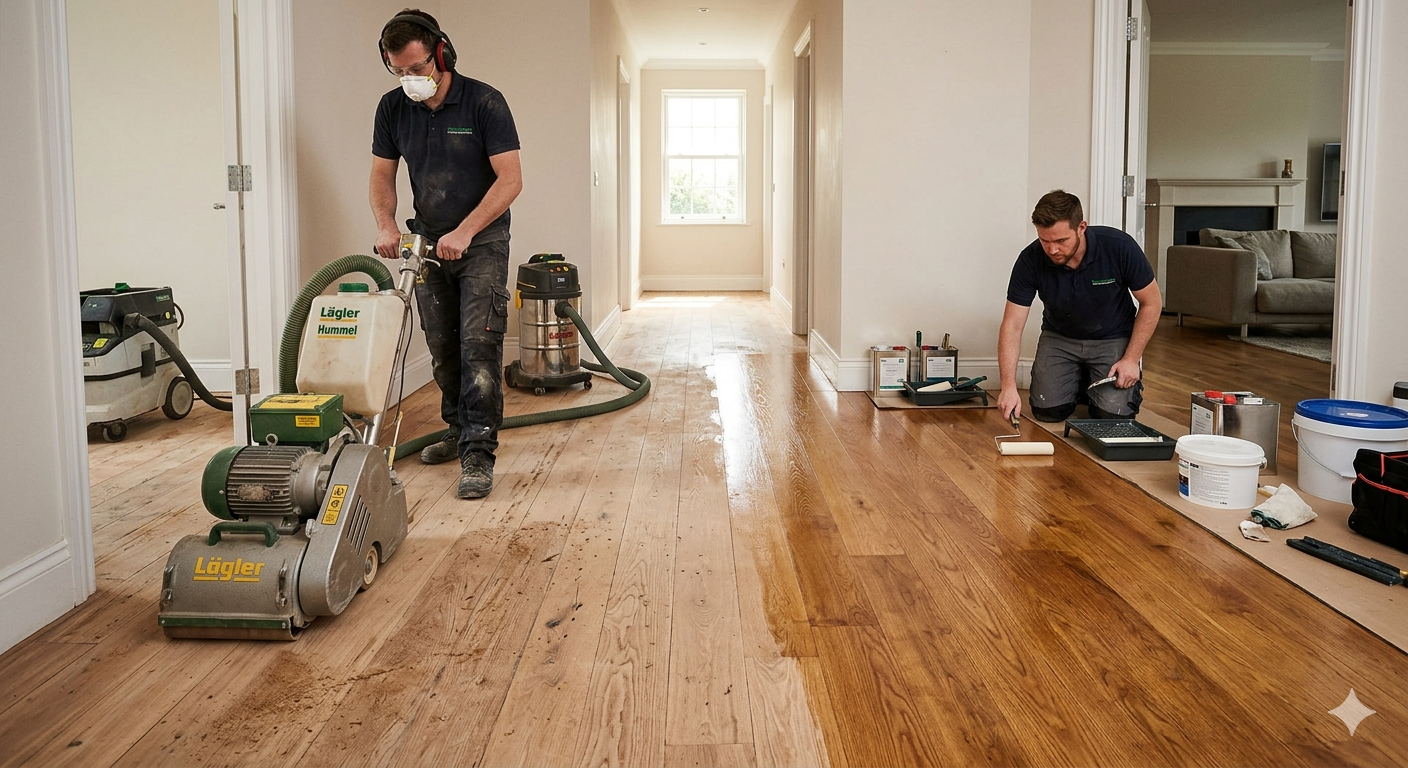
Hardwood floors are one of the most valuable features in any home, but over time they lose their shine, develop scratches, and start looking dull. This is where professional services like floor sanding and floor refinishing come in. Many homeowners confuse the two or assume they are the same service, but they are actually different steps in the process of restoring wood floors.
In this guide, we’ll break down floor sanding vs floor refinishing, explain how each works, when you need them, and how they can completely transform your floors.
What Is Floor Sanding?
Floor sanding is the process of removing the top surface layer of a hardwood floor using heavy-duty sanding machines. The goal is to eliminate:
- Scratches and scuff marks
- Old finish or sealant
- Stains and discoloration
- Uneven surfaces
During hardwood floor sanding, professionals use different grit levels of sandpaper to gradually smooth the wood. It starts with coarse grit to remove damage and ends with fine grit for a smooth finish.
Why Floor Sanding Is Important
Floor sanding is the foundation of any restoration project. Without proper sanding, refinishing products will not properly adhere to the wood surface. That’s why most wood floor sanding contractors always begin with this step before applying any finish.
It is especially useful for:
- Old hardwood floors
- Deeply scratched floors
- Water-damaged wood surfaces
- Floors with thick, worn-out coatings
Many homeowners search for floor sanding services near me when their floors start looking dull or uneven.
What Is Floor Refinishing?
Floor refinishing is the final stage of the restoration process. After sanding, a protective finish is applied to the floor to restore its appearance and durability.
This process includes:
- Staining (optional)
- Applying polyurethane or protective coating
- Buffing and polishing
- Sealing the surface
While sanding restores the raw wood, floor refinishing services bring back the beauty, color, and shine.
Benefits of Floor Refinishing
- Restores natural wood beauty
- Adds protective coating against damage
- Extends floor lifespan
- Improves home value
- Enhances shine and appearance
Many homeowners look for professional floor refinishing services when they want a high-end, polished look for their interiors.
Floor Sanding vs Floor Refinishing: Key Differences
Although both services are connected, they serve different purposes. Let’s break it down clearly:
1. Purpose
- Floor Sanding: Removes damage and old layers
- Floor Refinishing: Restores appearance and protects the floor
2. Process
- Floor Sanding: Mechanical abrasion using sanding machines
- Floor Refinishing: Application of stain, sealant, and finish
3. Timing
- Sanding always comes first
- Refinishing always comes after sanding
4. Tools Used
- Sanding machines, edgers, and abrasives
- Brushes, rollers, stains, and polyurethane finishes
5. Result
- Sanding gives a clean, raw wood surface
- Refinishing gives a shiny, protected, finished floor
When Do You Need Floor Sanding?
You likely need floor sanding services if you notice:
- Deep scratches or gouges
- Uneven surface texture
- Old finish peeling or fading
- Dark stains that won’t clean
- Floors looking gray or dull
If you are searching for floor sanding near me, chances are your floors are beyond simple cleaning and need restoration.
When Do You Need Floor Refinishing?
You need floor refinishing services if:
- The wood is still in good shape but looks dull
- The finish is worn but wood is not deeply damaged
- You want to change the floor color with staining
- You want added protection from moisture and wear
Many people also search for wood floor refinishing near me when they want to upgrade their home’s interior look without replacing flooring.
Floor Sanding and Refinishing Together
In most cases, both services are performed together as a complete restoration process called floor sanding and refinishing.
This combination is ideal for:
- Older homes with worn-out floors
- Homes preparing for resale
- Renovation projects
- High-traffic areas like living rooms and hallways
Professional floor refinishing contractors usually offer both services as a package.
Cost of Floor Sanding and Refinishing
One of the most common questions homeowners ask is about pricing. The floor sanding and refinishing cost depends on several factors:
- Size of the area
- Condition of the floor
- Type of wood
- Type of finish used
- Labor and location
On average, hardwood floor sanding and refinishing cost per square foot can vary significantly depending on your region and project complexity.
If you’re looking for affordable floor sanding services, it’s always best to get multiple quotes from experienced contractors.
Types of Floor Finishes Used in Refinishing
During the refinishing stage, different types of finishes can be applied:
1. Water-Based Finish
- Fast drying
- Low odor
- Clear appearance
2. Oil-Based Finish
- Rich amber tone
- Strong durability
- Longer drying time
3. Matte, Satin, or Gloss Finish
- Matte: natural and modern look
- Satin: balanced shine
- Gloss: high-shine luxury finish
Choosing the right finish is an important part of hardwood floor refinishing services.
Dustless Floor Sanding: Modern Solution
Traditional sanding creates a lot of dust, but modern companies now offer dustless floor sanding services.
Benefits include:
- Cleaner indoor environment
- Less cleanup after work
- Healthier air quality
- Faster project completion
This is becoming one of the most requested features in professional floor sanding services today.
DIY vs Professional Floor Sanding and Refinishing
Some homeowners consider doing it themselves, but there are risks:
DIY Challenges:
- Expensive rental equipment
- Uneven sanding results
- Risk of damaging wood
- Improper finishing application
Professional Advantage:
- Skilled floor sanding contractors
- High-quality equipment
- Smooth and even finish
- Long-lasting results
Hiring experts ensures your floor restoration services are done correctly the first time.
How Long Does the Process Take?
The timeline depends on the size and condition of the floor:
- Sanding: 1–2 days
- Refinishing: 1–3 days (including drying time)
So a complete floor sanding and refinishing project usually takes 2–5 days.
Final Thoughts
Understanding the difference between floor sanding and floor refinishing is essential before starting any wood floor restoration project. Sanding removes the damage and prepares the surface, while refinishing restores beauty and adds protection.
If your floors are scratched, dull, or outdated, investing in professional floor sanding and refinishing services is one of the best ways to restore your home’s appearance and value.
Whether you’re searching for floor sanding near me, wood floor refinishing contractors, or affordable floor restoration services, choosing experienced professionals ensures long-lasting and beautiful results.